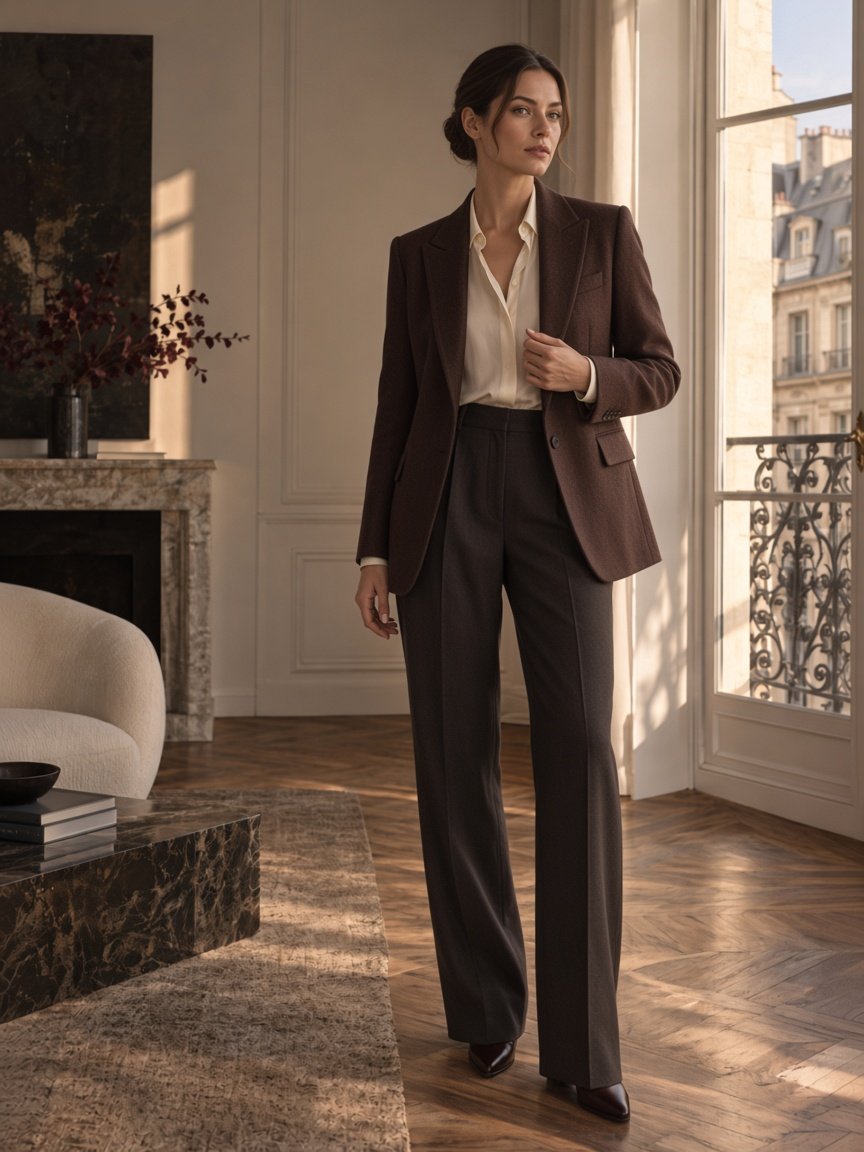
She does not want a garment bag in the office. The dress did not become evening. The context did.
Start with a dress you can sit in for three hours
Choose an office dress with a finished hem and a stable neckline. In daylight it is work. After six, remove the blazer, change the earring, or let a champagne cami show at the jacket if you kept the jacket on.
If you are shopping Office Dresses for this problem, ignore anything you would not sit in until the check arrives. Comfort is not the opposite of elegance; it is what allows elegance to last.
Use shine or a slip only after the day has held
What does not work is a fabric that only photographs at night, or a neckline you have been adjusting since lunch. Keep the day honest. Let one evening detail arrive after six — a slip, a cami, an earring — not a sequin.
Separates change register the same way
A fluid ivory blouse and a stone pleated trouser are a workday. Add the Espresso Wool Blazer at 10 a.m.; take it off at 7. None of this requires a second outfit — only a decision about whether the jacket stays on.
- Office Dresses is workplace first — sit, walk, present.
- Day-to-Night is the shopable map for one outfit, two rooms.
- Occasion Dresses is the event. Leave it for the event.
Journal FAQ
Do I need a second outfit in the office?
No. If the dress or separates can sit for three hours and change register with a jacket or an earring, the garment bag is the problem, not the calendar.
What should I avoid for desk-to-dinner?
Fabrics that only photograph at night, and necklines you will adjust all afternoon. If you would not sit in it until the check arrives, it is not this note.
Can separates do the same job as a dress?
Yes. A blouse, trouser, and blazer work the same way: the jacket is the switch, not a sequin.
Where should I shop after reading this?
Day-to-Night for the habit. Office Dresses if your workplace is stricter. Occasion Dresses only if the dinner is the event.